
Evolutionary Shrinkflation
The Dandelion Principle: Why Collapse Selects for Miniaturization, and What This Means for Humanity

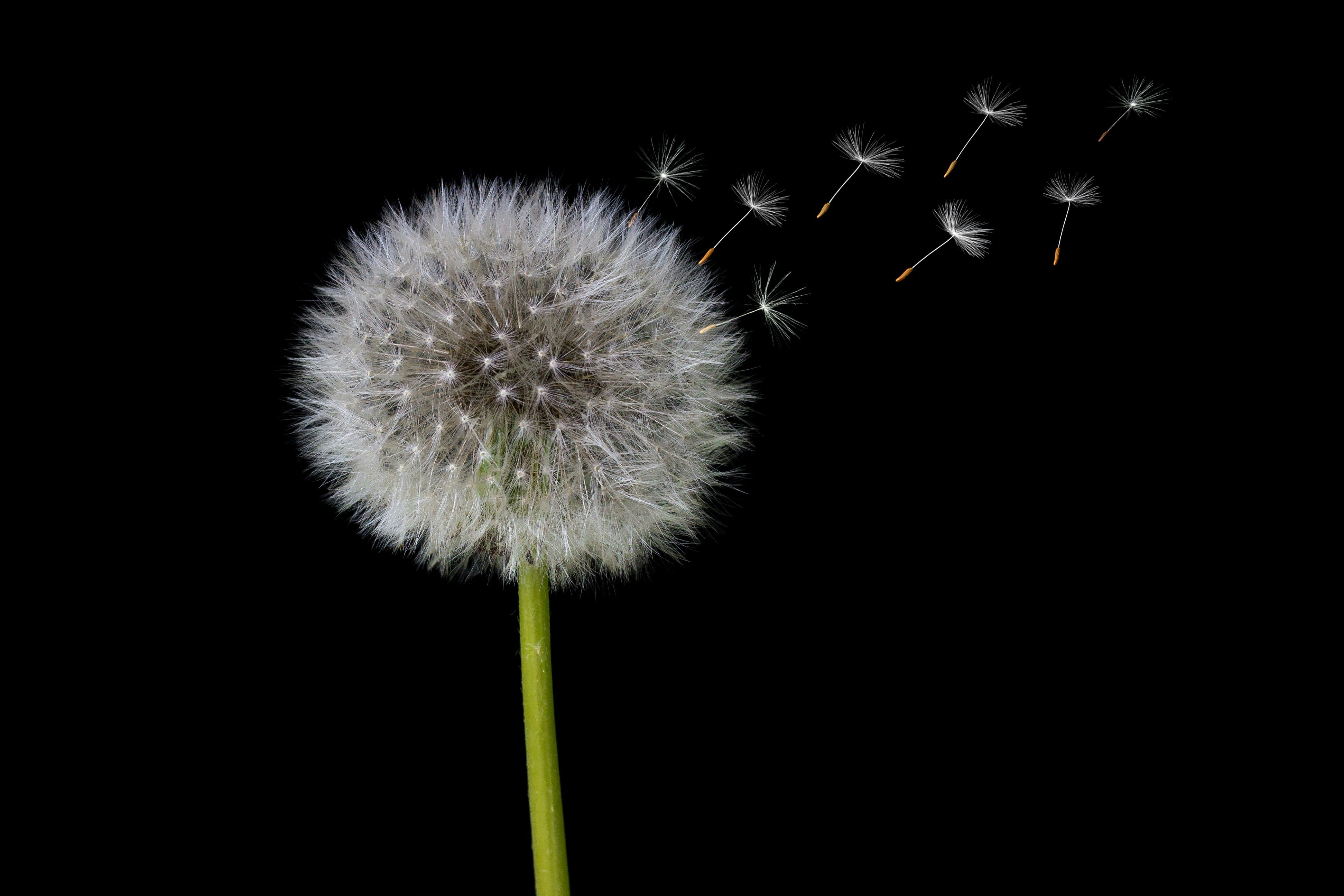
If there was ever a plant that could survive the apocalypse, it would probably be the common dandelion: yes, that ubiquitous weed with the generic, bright yellow flowers that appear on grass lawns in the spring and later turn into fuzzy, transparent globular seedheads you can blow and make a wish. Every time the supernova nebula-looking globe shatters into pieces, approximately 175 interstellar parachutes magically appear and disperse, each of them holding on to its precious cargo: a seed looking for a home. Although the wish you made may never come true, there is an approximately 100% chance that the dandelion you just blew into will continue, thrive, and persist as a species long after humans have driven themselves to extinction.
The perfectly shaped parachutes are in no hurry at all: each seed is a survival capsule meant to live through any, and every, apocalypse thrown at it: heat, cold, mechanical pressure, even radiation. Disfigured but fully functional dandelions emerged out of the forest floor in the town of Chernobyl following the nuclear reactor disaster almost half a century ago, stunning biologists and demonstrating just how tough this plant is. Its resilient, flexible genome appears to be bulletproof, able to shrug off even the odd radioactive mutation.
Although the dandelion seed can remain in dormancy practically forever, it eventually has to wake up. The plant only needs just one of those 175 parachutes to get lucky and land into a fertile, sunny position. So, before the dandelion seed has even thought of germinating, the survival odds of the species are already stacked heavily in its favour. Dandelions are living proof that, once life emerged on this planet, nothing could wipe it out. Nothing, except perhaps, another life form.
The dandelion is one of the most successful organisms on Earth, and there is more than a single reason for this. Over millions of years the plant has gone through a series of incredible genetic transformations which essentially made it “bomb-proof”, as we, gardeners, like to say. Dandelion leaves stay flush on the ground, helping the plant retain moisture, maximize photosynthesis, suppress neighbouring plants, shelter from intense winds and even avoid grazing by animals. It can survive heavy foot traffic because when you have no stems, there is nothing there to break. It is unpalatably bitter to many animals, or at the very least, is an acquired taste reserved for connoisseurs. Bitter dandelion salad with squeezed lemon juice is my favourite thing in the world, as it is for many Greeks.
The dandelion is the “thug next door” that ended up thriving anywhere and everywhere: not because it was able to muscle itself into the fabric of ecosystems, but because it kept a modest profile all along: it had surprisingly low expectations but big dreams, right from the start. Dandelions are lone opportunists acting in the sidelines, never hesitating to seize an opportunity and make their move. They thrive in places other plants either overlook, or wouldn’t dare to go to: Pavement cracks. Disturbed, malnourished soils. Even toxic zones. Dandelions are the scavengers of the plant kingdom: they go for small pickings no one wanted, rather than wait in line endlessly for a perfect situation that never arrives. Dandelions learned long ago that, rather than wait for the perfect opportunity, it is better to seize the one right here, right now. Over time, this made them highly adaptable and tough as nails. Dandelions are ruthless survivors: they’d rather eat a cold pizza slice they found on the street that was probably pissed on by a cat, than starve as they queue forever to order a fresh, expensive slice through an app on a busy Saturday night. That’s not a defeat. That’s evolution finding smart ways to continue.
The evolutionary journey of the dandelion followed a path that humans and many other organisms completely missed out on. Dandelions managed to conquer every continent except Antarctica not through sheer force, but because of their stoicism: letting go of what they cannot control. They chose to survive by living small, but thinking big. They bowed down to physical forces instead of resisting them, and this opened a whole new niche for them. They learned to turn chaos and instability into opportunity, rather than fear the lack of predictable, habitable conditions. Dandelions might as well be made of steel.
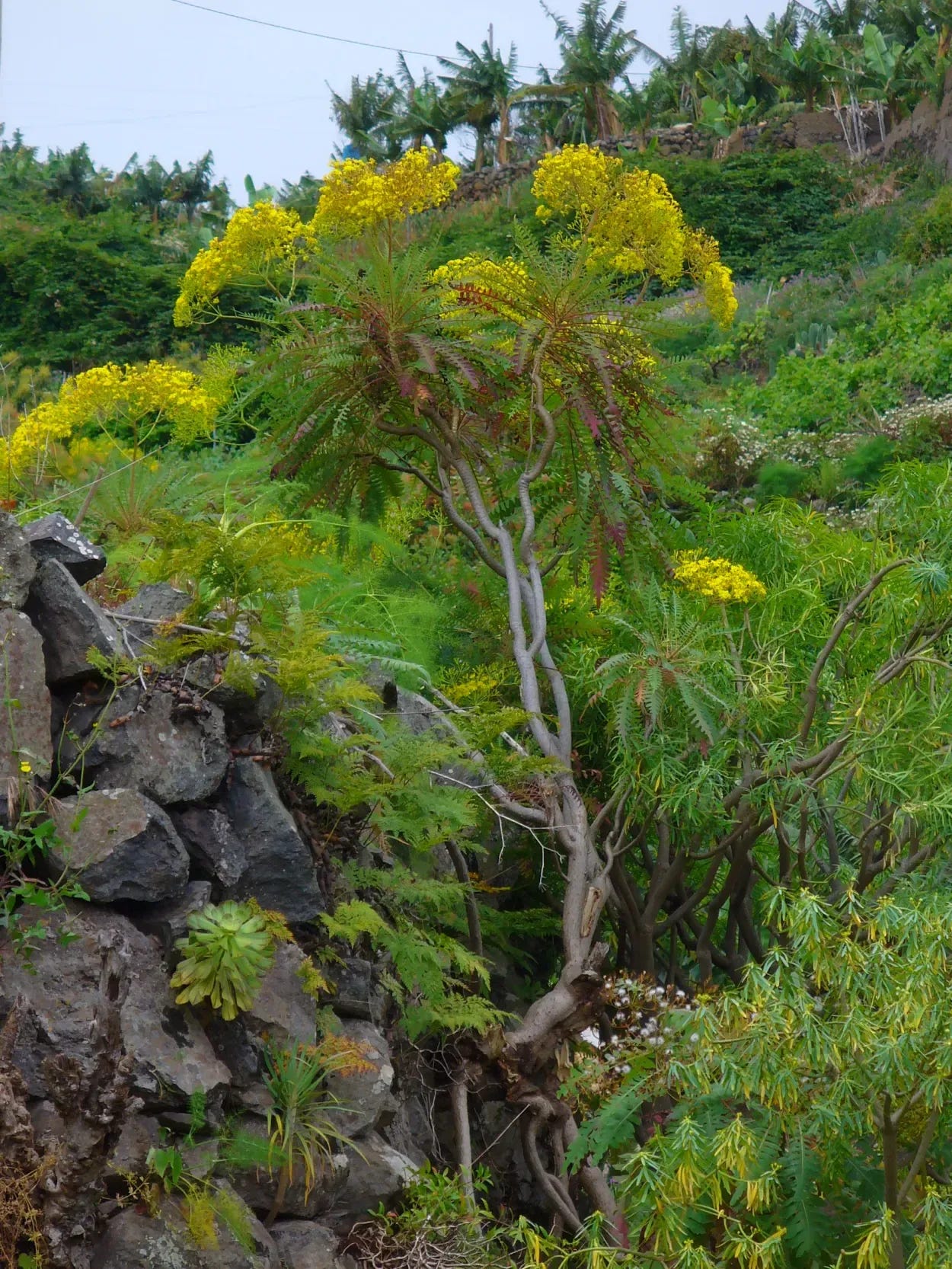
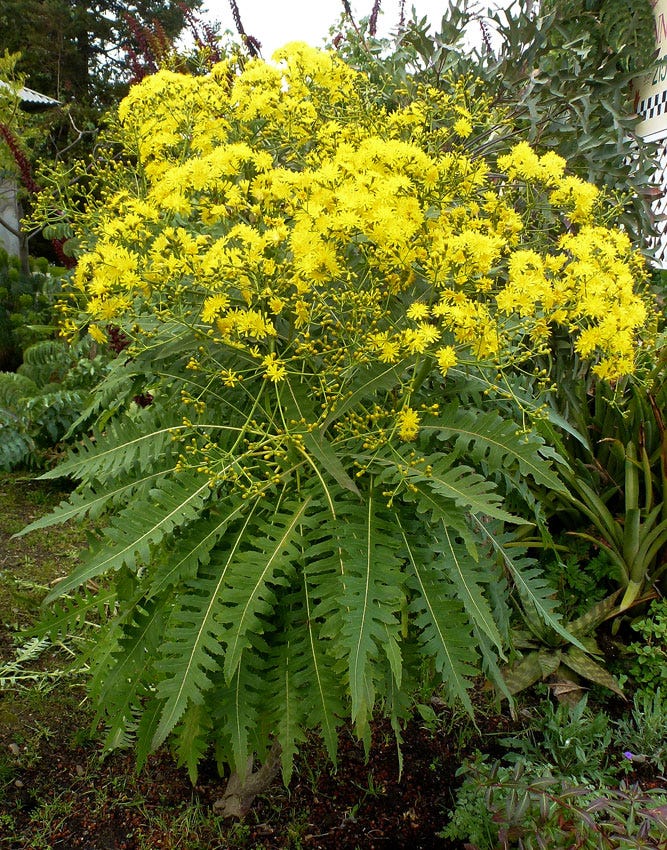
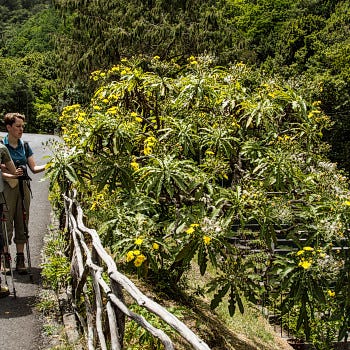
But there is an incredible twist to this story, because somewhere in the middle of the Atlantic Ocean there is an island called Madeira where a very different type of dandelion exists. Dandelions on Madeira look nothing like their relatives in the rest of the globe: they are huge plants, sometimes taller than a human. Some of them have even grown thick, woody trunks and have turned themselves into actual trees. This is a real-life story of Alice in Wonderland, and the reasons behind the existence of the monster dandelions of Madeira has nothing to do with magic potions, and everything to do with evolution and collapse. Dandelions on Madeira never had to face the types of threats their cousins across the globe faced: living on an isolated island, they had less competition from other plants, and virtually no grazing animals to fear. Instead of disappearing into the shadows, they fearlessly conquered the landscape. They became permanent fixtures, perennial plants that live for more than just one season.
But perhaps the biggest factor which ushered the dandelions of Madeira into an evolutionary path completely different to that of their cousins was the fact that they escaped a major extinction event: an ice age. Madeira is considered a “glacial refugium”, a place where many formerly abundant species survived because they were never reached by the ice sheets that covered much of the planet. Among other species one can find on Madeira there are giant carrots that are two metres tall, daisies that have turned into shrubs, and geraniums forming huge flowering domes 2 metres across. For any biologist, a trip to Madeira is a trip through million years of evolution that seem to have taken place on a strange dimension only a fairy tale could envisage.
What is interesting to me is not how Madeira dandelions became so huge, but why the common dandelion, the one that exists everywhere on Earth except for the tiny island of Madeira, became so diminutive. Collapse events seem to make things smaller, as it is the leaner, smaller organisms with less demanding resource needs which are best equipped to survive a mass extinction. The dinosaurs never came back, along with many other huge plants and animals. It is almost as if the ecosystem learned to pace itself along the way, embracing degrowth when it came to the size of many animals - even though evolution always wants to make things bigger, faster, stronger. But however ambitious evolution is, at the end of the day it is physics, energy, competition and resource availability which ultimately determine the size and reach of every organism. Humans are not exempt from this very simple rule.
So, what is humanity today? Is it the diminutive dandelion, or its monster cousin? As shrinkflation hits supermarket shelves and the climate crisis reduces the extent of habitable area on the planet, everything seems to be getting smaller. It would seem that humanity has been living its Madeira honeymoon phase all along: it is the dandelion tree. I call this The Madeira Effect. The time to shrink was yesterday. Only lean, less demanding populations and their downsized economies can survive on an increasingly impoverished planet. As far as our civilisation goes, we missed the train of evolutionary shrinkflation long ago, following the example of the dinosaurs and giant dandelions. We are incredibly close to losing it all, just like the dinosaurs.
All species alive on Earth today are survivors of one or more extinction events that took place in the planet’s history. All of us at some point went through an extinction filter, but having survived multiple extinctions never means you will survive the next one. Each one is different, and the current one is comparable to an asteroid collision: it may not be as fast, but it is equally dramatic, global, and accelerating. No evolutionary process, technology or “civilisation” can adapt to an ecosystem collapse when the civilisation itself, the culprit of this collapse, is living beyond its means. The survivors of the coming extinction will be the random opportunists, dandelions and other “weeds” of the ecosystem, rather than the superpredators who caused it.
An extinction event is never simply a collapse: it is a sudden downturn in Earth’s resource economy. Species like humans are too expensive for the planet to maintain during an extinction event. The hoarders, predators and parasites are always among the very first to get the chop.
My bestselling latest book The Biology of Collapse is Out Now:

Marvellous, literally. You have such a way of opening our outer and inner eyes.
Another version of Small is Beautiful. Small is surviving.